
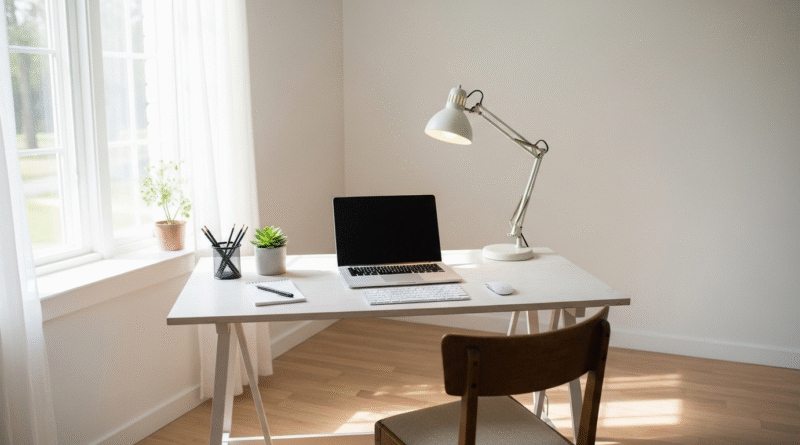
How to Create a Minimalist Workspace on a Budget
A cluttered workspace leads to a cluttered mind. But transforming your desk or home office into a minimalist sanctuary doesn’t require expensive furniture or designer organization tools. With intention and simplicity, you can create a workspace that promotes focus, flow, and calm—without breaking the bank.
Here’s how to set up a clean, functional, minimalist workspace on a budget.
1. Define the Purpose of Your Space
Ask yourself:
- What do I actually use this space for?
- What are my daily tasks vs. occasional ones?
- What kind of atmosphere helps me focus?
Clarity prevents you from buying or keeping what you don’t need.
2. Declutter First, Buy Later
Before organizing or decorating:
- Remove everything from the workspace
- Only put back items you use regularly
- Donate or repurpose unnecessary tech, stationery, or decor
Minimalism begins with less, not more storage.
3. Use What You Already Have
Minimalist design values resourcefulness. Try:
- Repurposing an unused table or surface as a desk
- Reusing jars or mugs for pen holders
- Using old boxes or trays to sort drawers
You don’t need to shop—you need to simplify.
4. Choose Functional Over Fancy
Focus on essentials like:
- A sturdy chair with good posture support
- A simple desk or table (even a foldable one)
- Natural light or an affordable desk lamp
- A small shelf or box for papers and tools
Minimalism is practical, not performative.
5. Go Digital to Reduce Physical Clutter
Where possible, digitize:
- Notes (use apps like Notion, Evernote, or Google Keep)
- Schedules and calendars
- Reference documents and papers
Digital minimalism = fewer items on your desk.
6. Limit Decor to One or Two Elements
Avoid over-decoration. Choose:
- One calming image, framed quote, or vision board
- A single plant or candle
- A neutral color palette to reduce visual noise
Your desk should soothe, not distract.
7. Use Vertical and Hidden Storage
If space is tight:
- Install a small wall shelf for essentials
- Use drawer dividers or boxes under the desk
- Hang items like headphones or tools on hooks
Out of sight = out of mind = more focus.
8. Clean Up at the End of Each Day
Prevent mess buildup with a daily reset:
- Put everything back in its place
- Wipe surfaces in seconds
- Leave the space clean and welcoming for the next day
Small habits create lasting peace.
9. Add Personal Value, Not More Stuff
Minimalism doesn’t mean sterile. Personalize with:
- Items that inspire, not distract
- A quote or goal that reminds you of your why
- A minimalist timer or clock to support time-blocking
Make the space yours, not everyone else’s.
Final Thoughts: Less Mess, More Focus
A minimalist workspace is a powerful productivity tool. It removes distractions, saves time, and supports your goals without draining your wallet. Whether you work from home, study, or create—simplicity is the most underrated upgrade.