
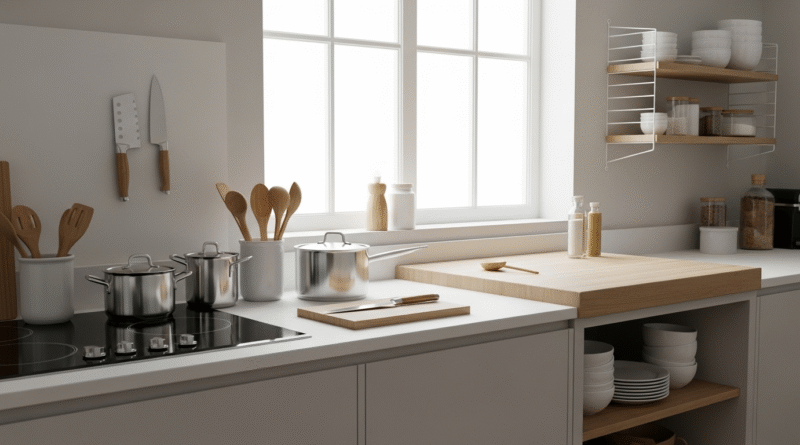
Minimalist Kitchen: Tools You Actually Need
The kitchen is one of the easiest places to accumulate clutter—gadgets, duplicates, trendy appliances, and rarely used utensils. But cooking doesn’t require excess. A minimalist kitchen is efficient, calm, and filled only with tools that serve you regularly and well.
Here’s how to simplify your kitchen and keep only what you truly need.
1. Define Your Cooking Style
Start by asking:
- What meals do I actually cook each week?
- Do I enjoy baking or prefer quick stovetop meals?
- Am I cooking for one, two, or a family?
This helps you identify what’s essential and what’s just taking up space.
2. Declutter by Category
Go through tools by group:
- Utensils: Keep 1–2 of each type (spatula, spoon, whisk)
- Cookware: A skillet, saucepan, and stockpot cover most needs
- Bakeware: Keep what you use monthly (baking sheet, loaf pan, muffin tin)
- Knives: One good chef’s knife, a paring knife, and a bread knife often suffice
Duplicates and “just in case” items create chaos, not convenience.
3. Ditch the Single-Use Gadgets
Consider letting go of:
- Avocado slicers
- Egg separators
- Pancake batter dispensers
- Popcorn machines
Your hands, a good knife, and a mixing bowl usually do the job.
4. Keep Flatware and Dishes Minimal
Ask yourself:
- How many people live here?
- How many guests do I realistically serve?
Stick to a modest set of plates, bowls, mugs, and utensils. Hosting occasionally doesn’t require a buffet setup every day.
5. Store Smart, Not Wide
Simplify access by:
- Hanging utensils or pans on hooks
- Using drawer organizers for essentials
- Storing less-used tools in a single bin or high cabinet
- Keeping countertops mostly clear
A clean space encourages cooking and reduces stress.
6. Invest in Versatile Tools
Minimalism is about more with less. Choose:
- A cast iron skillet (oven and stovetop ready)
- A blender that doubles as a food processor
- Glass containers that go from fridge to oven to table
- A Dutch oven for everything from soups to roasts
Quality and versatility beat quantity every time.
7. Reduce Pantry Clutter
Apply minimalism to food too:
- Choose core ingredients you use weekly
- Avoid stocking items that expire untouched
- Organize by category (grains, sauces, canned goods) and label clearly
Fewer ingredients = less waste + faster meals.
8. Create a Calm Aesthetic
Visual simplicity makes the kitchen more inviting:
- Use one or two decor elements (plant, art, wooden spoon jar)
- Keep the fridge front free of papers and magnets
- Let white space on shelves calm the room
Minimalism isn’t just functional—it’s also beautiful.
Final Thoughts: Cook More, Clean Less
A minimalist kitchen doesn’t take away from your cooking—it enhances it. When you have fewer, better tools and an uncluttered space, preparing meals becomes easier, more enjoyable, and more intentional.
Clear the drawers. Simplify your setup. Enjoy the process.